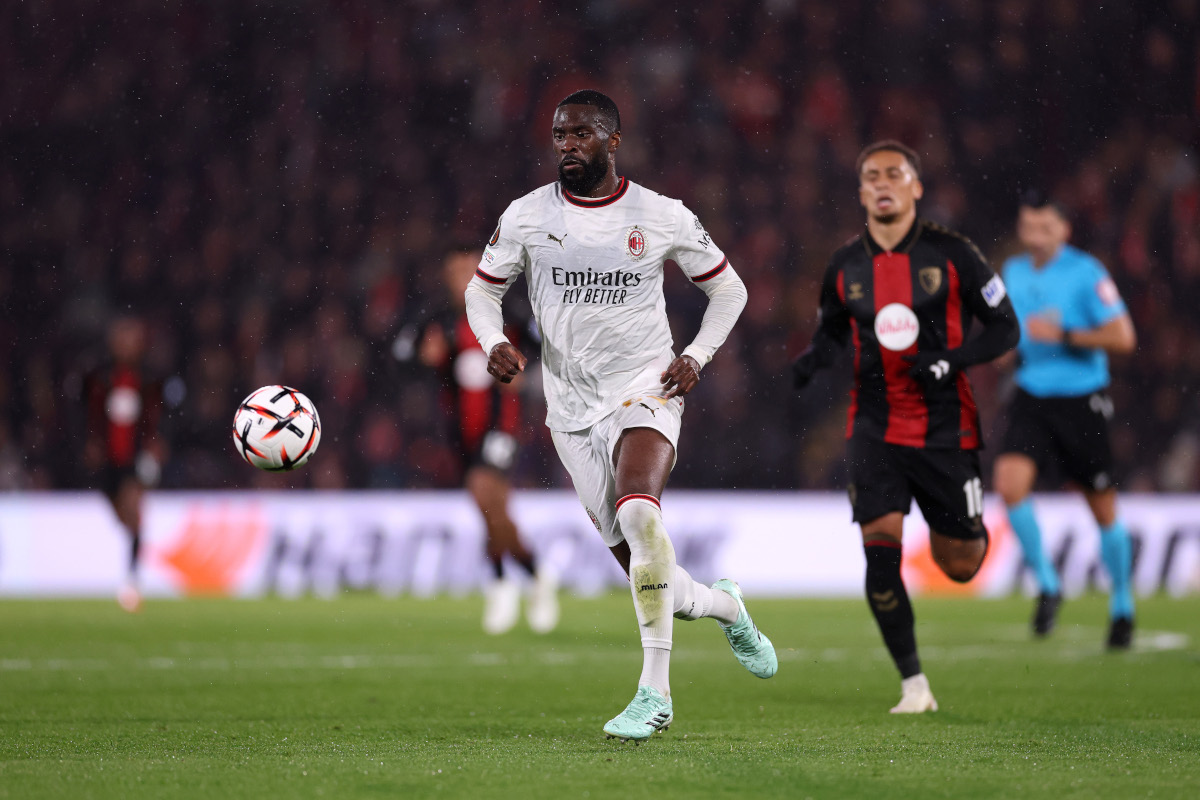


Friday’s reports confirm that Jeff Ekhator is finally back in full training with Juventus, which means that he could potentially be in line for his first competitive Bianconeri appearance in the near future.
Ekhator joined Juventus from Genoa for a fee of €16m plus bonuses during the summer transfer window, but a series of early injuries have prevented him for appearing competitively for his new club thus far.
Key Developments in Spalletti recovers another option
The 19-year-old suffered a muscular injury during a pre-season friendly against Basel back in mid-July, which ruled him out of action until the second week of the Serie A season. He was an unused substitute for Juve’s second league fixture of 2026-27, against Parma, but then suffered a hamstring injury which has kept him out of action ever since.
According to reports from Gianluca Di Marzio, Tuttosport and various other outlets in Italy, Ekhator is now back in full training with Juventus.
Post-Match Reactions and Strategic Impact
He is unlikely to be thrown straight into the starting line-up given that he has missed the last two months and another six weeks shortly before then, but could provide Luciano Spalletti with a different option off the bench to rotate with Randal Kolo Muani and Nick Woltemade at centre-forward.
The Bianconeri will next be in action at 19.45 GMT on Sunday against Napoli in Serie A.
Tactical Telemetry and Strategic Analysis in Spalletti recovers another option
The tactical parameters underpinning this Football encounter revealed critical nuances in structural discipline and transitional efficiency. Both teams engaged in deliberate phase-building, seeking to exploit microscopic positional imbalances across high-leverage sectors of the playing surface. Analytical telemetry indicates that ball retention in contested half-spaces proved decisive in dictating the overall tempo, forcing opposing units to continuously reshuffle their defensive blocks.
Furthermore, tactical adjustments implemented during critical intervals altered the trajectory of play. The technical staff's emphasis on rapid recovery phases and controlled territorial progression disrupted opponent rhythm, ensuring that high-pressure phases yielded tangible competitive advantages rather than passive defensive consolidation.
Championship Ramifications and Forward Calendar
Beyond the immediate outcome, this result carries profound consequences for championship trajectory and upcoming fixtures across Football. Technical departments from both camps now face crucial analytical debriefs, dissecting individual duel success rates and physical workload metrics to calibrate training cycles for the grueling calendar ahead.
With subsequent rounds promising heightened intensity, the ability to maintain composure during decisive match phases will remain the ultimate benchmark. As fixtures accumulate, physical resilience and tactical versatility will dictate which organizations consolidate their status at the summit of elite competition.