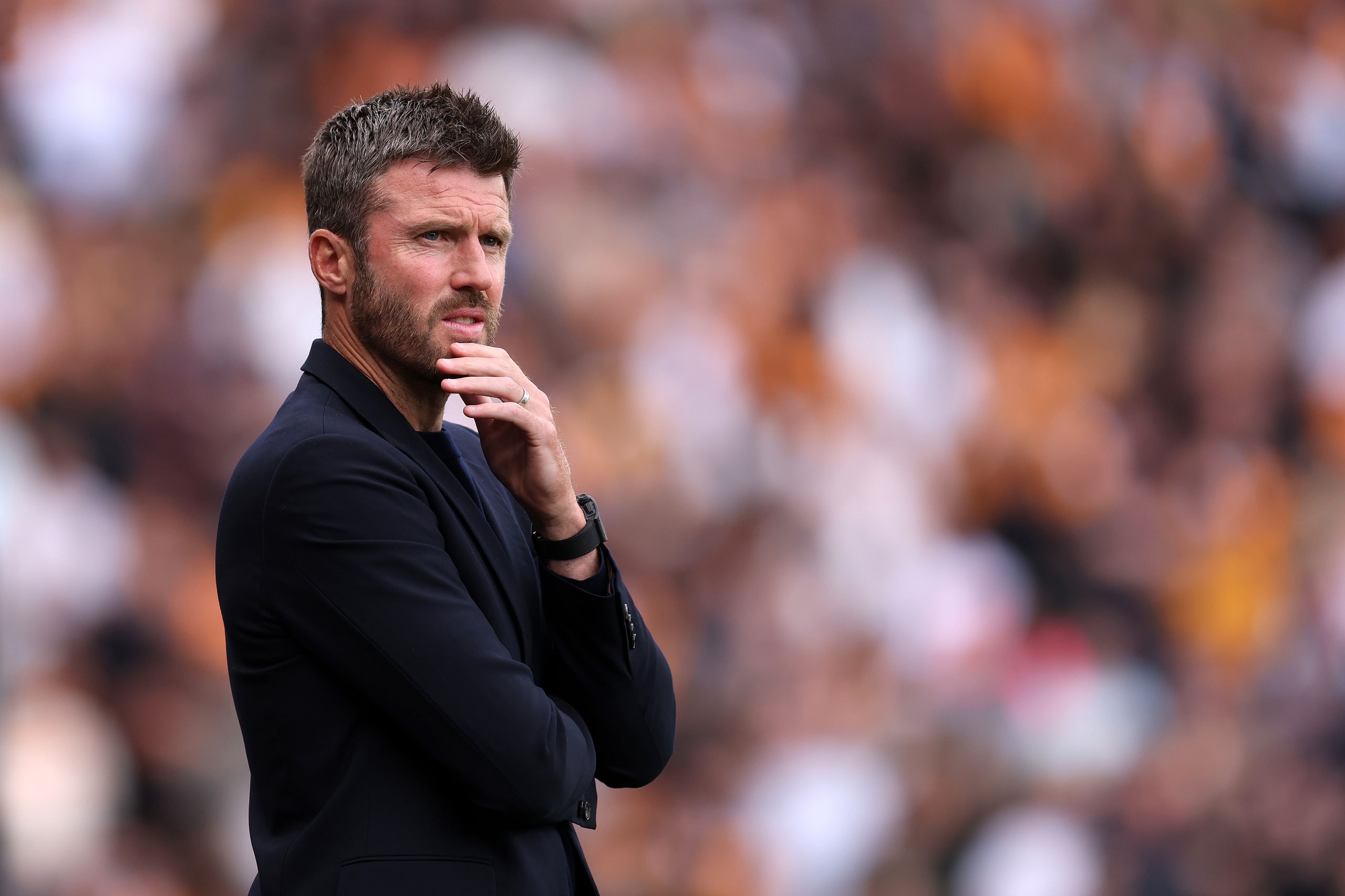


Eddie Howe has been out of work since leaving Newcastle United in the summer
When Sir Jim Ratcliffe became a co-owner of Manchester United in 2024, much of the narrative centred on his desire to rebuild the club around a British core.
Key Developments in What Howe could bring
Given the expense of buying homegrown players, and the difficulties Michael Carrick - the first permanent British managerial appointment of the Ineos era - has faced this season, perhaps Ratcliffe is rethinking.
But if Carrick fails to stop the rot and loses his job, United are already considering the merits of appointing another British coach - albeit one who is more experienced.
Post-Match Reactions and Strategic Impact
That Eddie Howe is a contender for a job that remains one of the most high-profile in world football isn't hard to fathom.
Speak to those who have worked alongside Howe and they describe a man whose track record of improving players is a direct result of his relentless approach on the training field.
They will also tell you Howe is someone who places an unwavering importance on the methodology of setting a winning culture.
Howe may lack experience at one of the traditional top-six clubs, but his body of work at Bournemouth and Newcastle is impressive.
Having been appointed Bournemouth boss with the club facing relegation from League Two in January 2009, Howe led them to the Premier League in 2015. He went on to establish the Cherries as a top-flight club before leaving - for a second time - in 2020.
In 2021, Howe was appointed Newcastle manager. He led them from relegation trouble to qualification for the Champions League on two occasions and won the EFL Cup - the club's first trophy in 56 years - in 2025.
Man Utd stick with Carrick - inside a turbulent 48 hours at Old Trafford
Of course, managing Manchester United is an altogether different proposition.
Indeed, Howe's emergence as a potential successor to Carrick has been greeted with negativity in some circles.
Sections of the fanbase have been vocal on social media with their opinion that Howe isn't a big enough name to replace Carrick.
Former United players Paul Scholes and Nicky Butt also fell short of providing their backing to Howe on their podcast, though it is worth pointing out they spoke in favour of the 48-year-old's potential appointment when Ruben Amorim was sacked in January.
Tactical Telemetry and Strategic Analysis in What Howe could bring
The tactical parameters underpinning this Football encounter revealed critical nuances in structural discipline and transitional efficiency. Both teams engaged in deliberate phase-building, seeking to exploit microscopic positional imbalances across high-leverage sectors of the playing surface. Analytical telemetry indicates that ball retention in contested half-spaces proved decisive in dictating the overall tempo, forcing opposing units to continuously reshuffle their defensive blocks.
Furthermore, tactical adjustments implemented during critical intervals altered the trajectory of play. The technical staff's emphasis on rapid recovery phases and controlled territorial progression disrupted opponent rhythm, ensuring that high-pressure phases yielded tangible competitive advantages rather than passive defensive consolidation.
Championship Ramifications and Forward Calendar
Beyond the immediate outcome, this result carries profound consequences for championship trajectory and upcoming fixtures across Football. Technical departments from both camps now face crucial analytical debriefs, dissecting individual duel success rates and physical workload metrics to calibrate training cycles for the grueling calendar ahead.
With subsequent rounds promising heightened intensity, the ability to maintain composure during decisive match phases will remain the ultimate benchmark. As fixtures accumulate, physical resilience and tactical versatility will dictate which organizations consolidate their status at the summit of elite competition.