

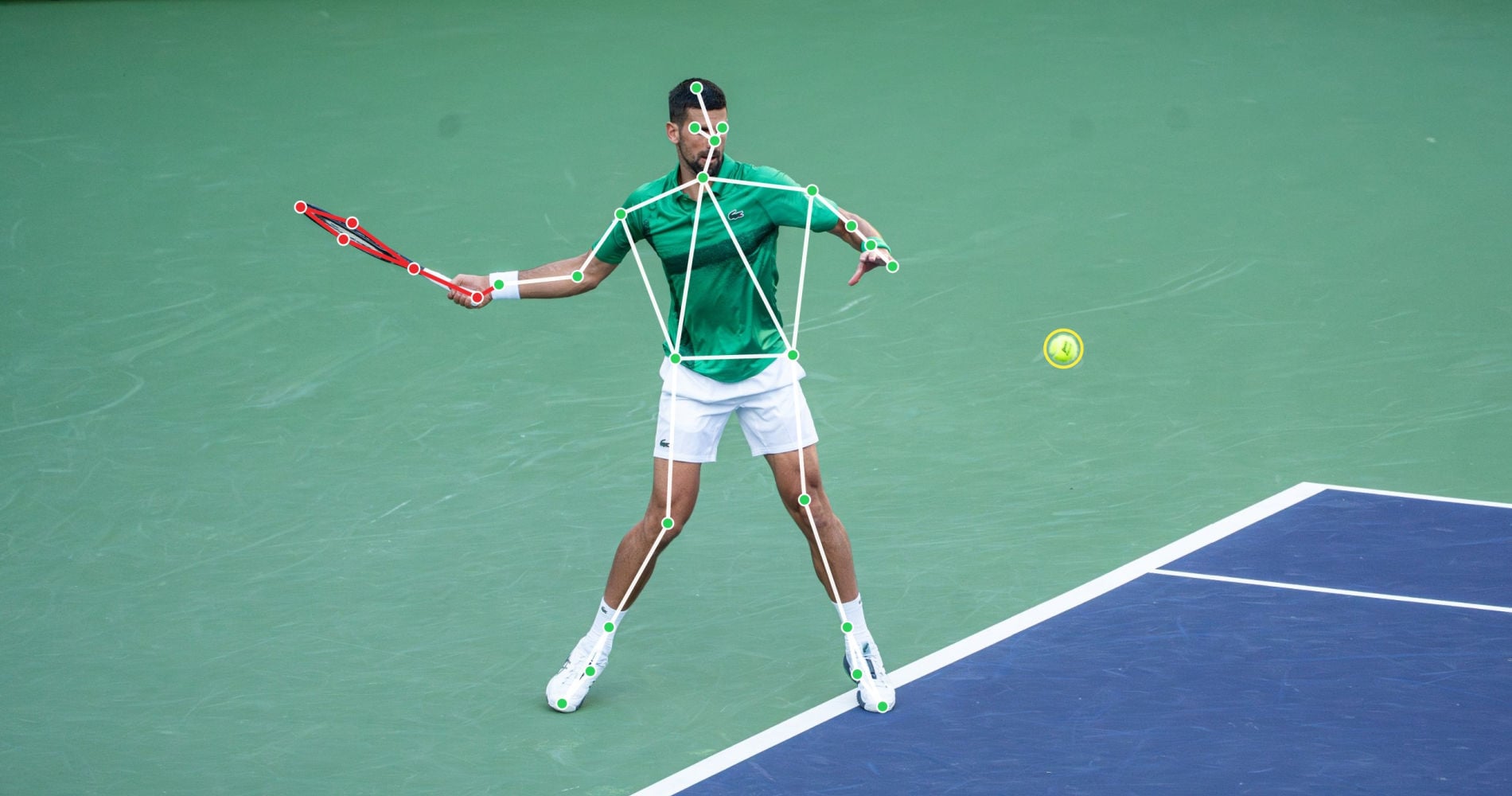
Eye tracking turned tennis into one of the most data-driven sports - and why performance metrics now shape every set-winner and game-handicap market
Tennis is one of the simplest sports to watch. Two players, one court, a ball that goes back and forth until someone misses. No lineup rotations, no roster depth charts, no weather delays that last three hours. You can explain the rules to a stranger in two minutes flat.
Key Developments in The evolution of player
But when it comes to serious bettors, tennis is always said to be one of the toughest sports to bet on. The difference between how simple the sport looks and how complex its markets are is bigger than in almost any other major sport. It’s a good idea to think about this contradiction, because once you understand why it exists, you understand how the whole market is priced.
We tracked this question using ATP and WTA data from the 2025 and 2026 seasons. Most people who bet on the sport don’t realise that the odds are actually driven by something else.
Post-Match Reactions and Strategic Impact
For most of the history of tennis, bookies priced matches the way a knowledgeable fan would: head-to-head records, surface, current form, ranking. That info was public, and the market reflected it pretty quickly. The edge was narrow.
Eye came into Grand Slam matches and eventually spread across the ATP and WTA tours. What started out as a line-call review system has turned into something else entirely: a granular data feed. Every match now generates serve speed, first-serve percentage, break point conversion rate, return points won, and net approach success rate. The ATP tracks more than 60 different performance metrics for each player in each match. SAP processes ATP data through its partnership with the tour, and publishes aggregated player statistics that anyone can access at atptour.com.
The change in the markets was pretty fundamental. Bookies aren’t just relying on reputation when it comes to tennis anymore. They price it based on how well it actually performs, updating it as it’s being used. That’s why in-play odds on a tennis match can change faster than pretty much any other live market: a single break of serve, or a visible drop in first-serve percentage from 68% to 51%, can shift a set-winner price significantly within two games.
This is the bit that casual bettors often miss. They look at the pre-match odds and think they reflect how the match will go. They usually show the results of the last three matches more than anything else.
Most of the action in the market for match-winners happens there. But it’s also where you’ll find the most sophisticated pricing. If you’re a regular with player tracking data, you’ll know that the edges, when they exist, tend to be in the secondary markets.
We checked out five market types across a sample of 200 matches from the 2025 and 2026 clay and hard-court seasons to see what data inputs are most linked to correct pricing.
Source: ATP TennisAbstract data aggregations, atptour.com player statistics 2025-26.
The first set winner market is one to watch. We checked the Tennis Betting odds online for a few big tournaments in 2025 and 2026, and it looks like first-set pricing is usually a couple of days behind the player’s recent Hawk-Eye serve data. When a player’s first-serve percentage suddenly dropped in their last match because of a visible mechanical change or minor physical issue, the market didn’t always show this before the next match.
That gap tends to close pretty quickly in live betting. Before the match, it sometimes carries on.
We followed these five players across the 2026 Roland Garros men’s draw. Players ranked outside the top 30 who ranked in the top third of the draw for current-tournament first-serve percentage did better than their pre-match set-winner odds, which was interesting statistically, but the sample was small enough that it would be a bit of a stretch to draw strong conclusions from the data. We’re well aware of that.
The paradox at the start doesn’t really resolve itself. Tennis is still pretty straightforward to watch. The market is still really complex, and it’s got more technical as Hawk-Eye data has got more detailed. The bettors who use it are doing something that looks like sports analysis but is more like applied statistics: finding matches where the real-time serve and return data hasn’t yet fully moved the pre-match price. We can’t say for sure whether that gap is big enough to be a long-term edge, unless we’ve got a big sample size and we’re keeping track of things really carefully. The data is public. The question is whether you’re willing to read it.